Hallgatói portál

University of Pannonia Showcases Its Programmes in Azerbaijan and Georgia – New Opportunities for International Student Recruitment
The University of Pannonia participated in the international event series “Study in Hungary Visit: Azerbaijan and Georgia 2026”, organised by the Tempus Public Foundation. Held in Baku and Tbilisi in October 2026, the professional visit aimed to promote Hungarian higher education, increase the university's international visibility, and strengthen relationships with students and educational institutions in Azerbaijan and Georgia.
The University of Pannonia was represented at the events by Dr. Szilárd Szentgyörgyi, Associate Professor and Rector's Commissioner for International Affairs. The programme included higher education fairs, secondary school visits, and alumni gatherings, providing opportunities for the university to present its international study programmes and the benefits of studying in Hungary to a wide range of target audiences.
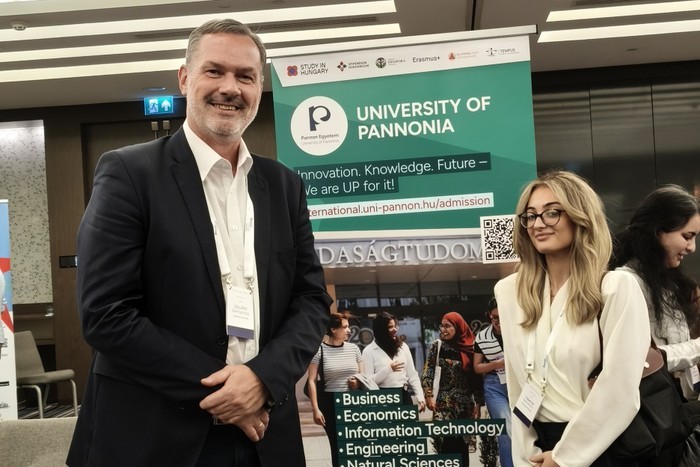
Direct Engagement with Prospective International Students
Among the highlights of the event series were the higher education fairs organised by Begin Group in Baku and Tbilisi. Across the two events, approximately 100 visitors approached the University of Pannonia's stand to learn about its English-taught degree programmes, admission requirements, and available funding and scholarship opportunities.
During these face-to-face meetings, particular attention was given to the opportunities offered by the Stipendium Hungaricum Scholarship Programme, self-funded study options, and the value of university degrees in the labour market. Visitors could also learn about student services, accommodation in university dormitories, and student life in Hungary.
One of the key insights from the events was that practical applicability of degree programmes, future employment prospects, and study financing play a significant role in the higher education decisions of young people in Azerbaijan and Georgia. Direct conversations therefore not only helped introduce the university but also contributed to a deeper understanding of prospective students' needs in these countries.
University of Pannonia Programmes Promoted at Six Secondary Schools
In addition to the higher education fairs, the Hungarian delegation visited three English-language private secondary schools in each city. During these visits, students in grades 9–11, as well as those in their final year, had the opportunity to learn about studying in Hungary and the degree programmes offered by the University of Pannonia.
Students' questions and feedback provided valuable insights into the factors influencing their decisions to study abroad and the information they need to make informed choices.
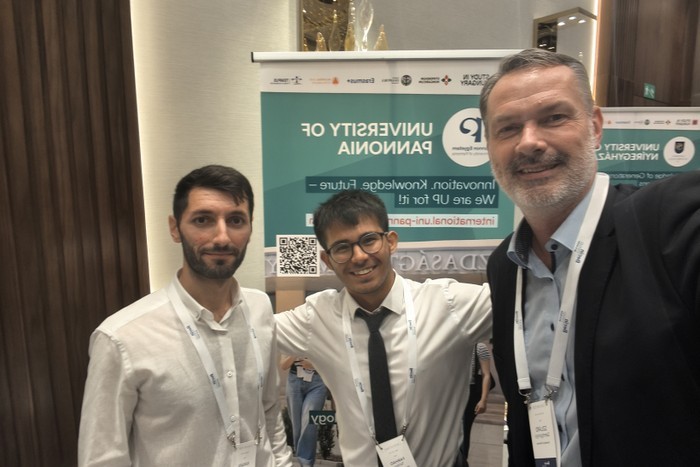
The secondary school visits may also contribute to establishing long-term institutional partnerships, which could become important pillars of the University of Pannonia's international student recruitment activities in the future.
The Role of the Alumni Community in Building International Connections
As part of the professional programme, alumni gatherings were also held in Baku and Tbilisi with the involvement of the Hungarian embassies and the Tempus Public Foundation. These events provided opportunities to learn about the experiences of international graduates who had previously studied in Hungary and to strengthen relationships with them.
At the event in Baku, Dr. Szilárd Szentgyörgyi also met with Kanan Azimov, a former master's student at the University of Pannonia's Faculty of Engineering, who is planning to continue his doctoral studies at the university.
The alumni gatherings highlighted how former students' personal experiences and professional career paths can provide authentic insights into the value of Hungarian higher education. Actively engaging the alumni community may therefore continue to play an important role in promoting the university internationally and reaching prospective students.
Laying the Foundations for Long-Term International Cooperation
The visits to Azerbaijan and Georgia provided valuable insights not only into international student recruitment but also into opportunities for cooperation in higher education. Establishing personal connections, gaining a deeper understanding of the characteristics of the target countries, and tailoring communication to local needs can all contribute to further strengthening the University of Pannonia's international presence.
The experiences reinforced the importance of clear, multilingual information, improved digital communication channels, and targeted promotion of scholarships and career opportunities associated with degree programmes as essential elements of effective international student recruitment.
Further Information About the University of Pannonia's International Study Programmes and Scholarship Opportunities: